
This Is All You Need! How to Identify a Mechanical Keyboard
If you are not familiar with keyboards, it can be surprisingly difficult to distinguish a mechanical keyboard. This time, we will explain how to identify a mechanical keyboard.
Modified at: 2025.7.14Posted at: 2023.5.19
How to Identify a Mechanical Keyboard by Appearance
Actually, it is surprisingly difficult to judge just by appearance, "This is a mechanical keyboard!", but there are a few points to look for.
- Height of the keycaps
- Gap between the switch (or base board) and the keycap
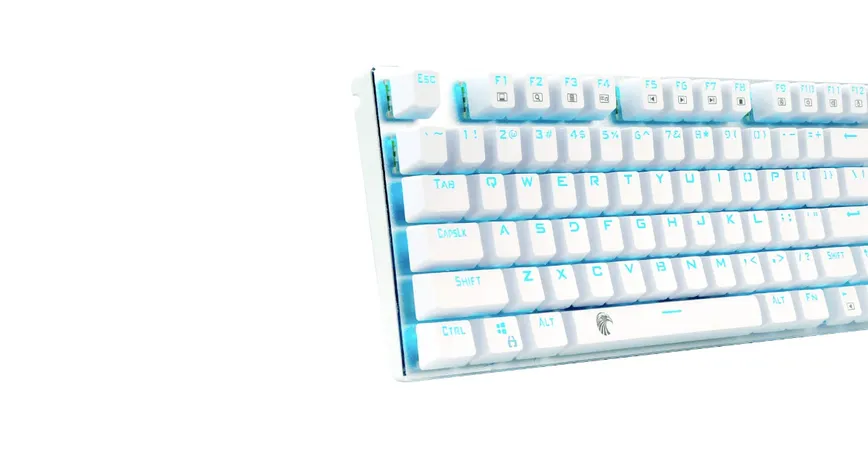
The easiest point to notice is the height of the keycaps. Mechanical keyboards have tall key switches, which results in taller keycaps. However, be careful, as some non-mechanical keyboards (such as electrostatic capacitive types) can also have tall keycaps.
Next, pay attention to the gap between the switch and the keycap. Many mechanical keyboards have a longer keystroke, so the keycaps often appear to float above the switch (or base board). The headline image of this article is a good example.
Therefore, if the keycaps look like they are floating above the board, there is a high possibility that the keyboard is mechanical.
How to Identify a Mechanical Keyboard from the Specifications Table
The best way to identify a mechanical keyboard is to check the manufacturer's specifications table.
If it is a mechanical keyboard, the manufacturer's specifications will always list the type of switch. This includes the switch manufacturer and the type of switch stem. If the specifications mention key switches, you can be almost certain it is a mechanical keyboard.
Beware of Keyboards That Only Look Mechanical
Recently, there are more keyboards that look like mechanical keyboards but are not, such as Razer's "Mecha-Membrane." If you judge only by appearance, you may end up buying something that is not actually mechanical.
Even manufacturers that mainly produce mechanical keyboards may have non-mechanical keyboards in their lower-grade models, so do not judge by brand or manufacturer name alone—be sure to check the specifications table carefully.